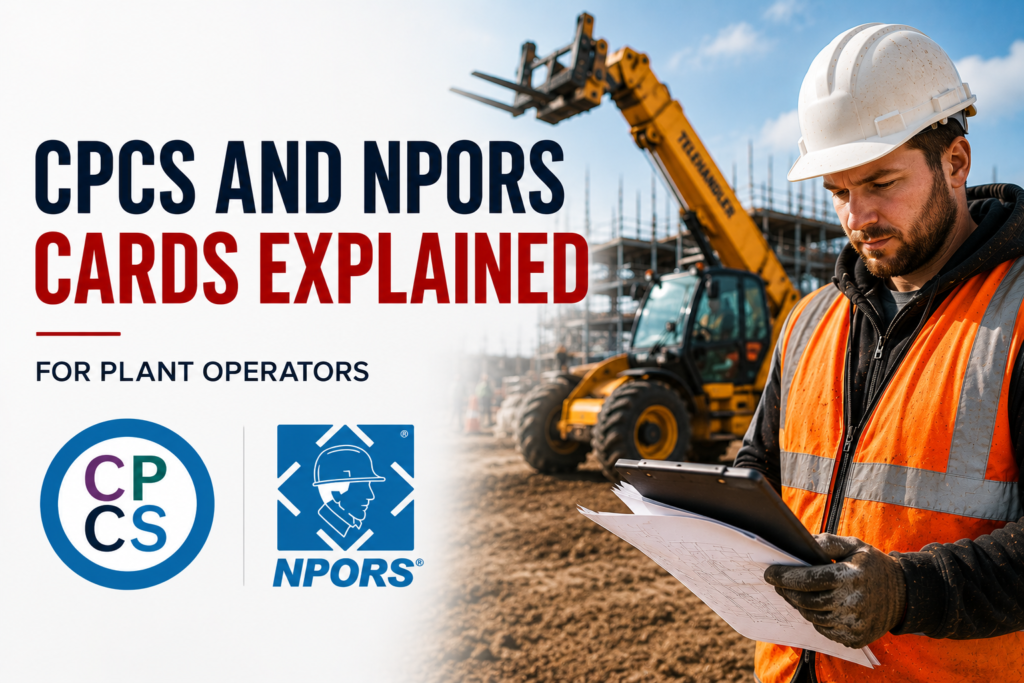
CPCS and NPORS Cards Explained for Plant Operators
CPCS and NPORS cards explained for plant operators. Learn how Red and Blue cards work, how to upgrade
CPCS A02 & NPORS N103 Blue Competent Operator Card Route
Complete your Crawler Crane NVQ with CADUK Skills Academy and upgrade from a Red Trained Operator card to the Blue CPCS or NPORS Competent Operator card.
Free to apply. No obligation. An assessor will call to confirm suitability before you enrol.
£745 + VAT
Multiple category discounts available • Save up to 40%
VISA Debit/Credit Klarna
★★★★★ Fast-track NVQ assessment for experienced plant operators Read the FAQs
Recognised Routes & Awarding Bodies
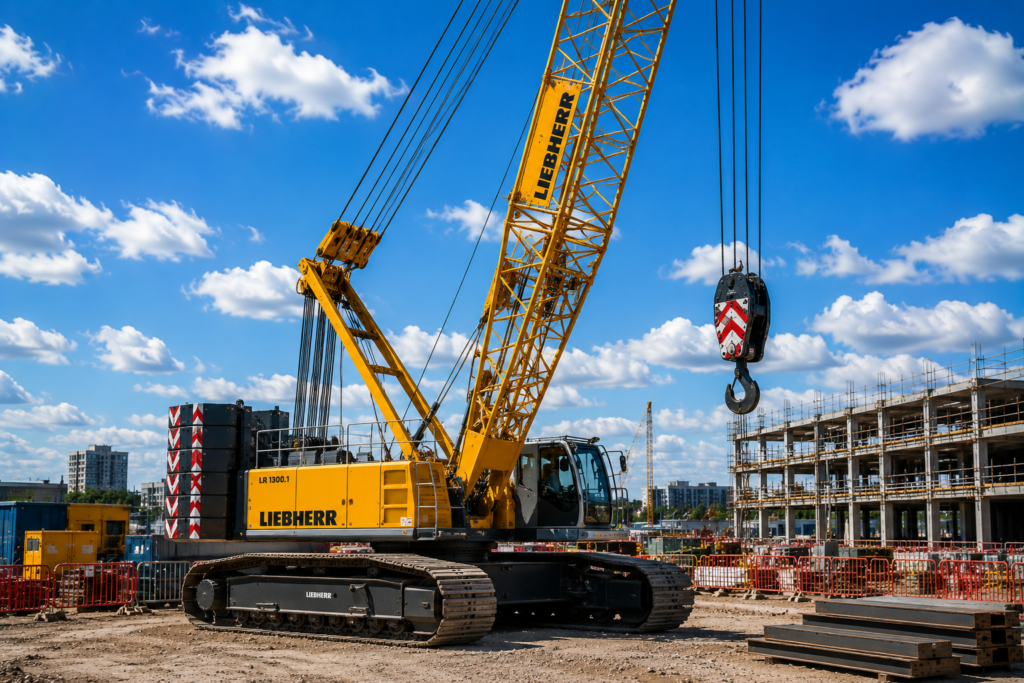
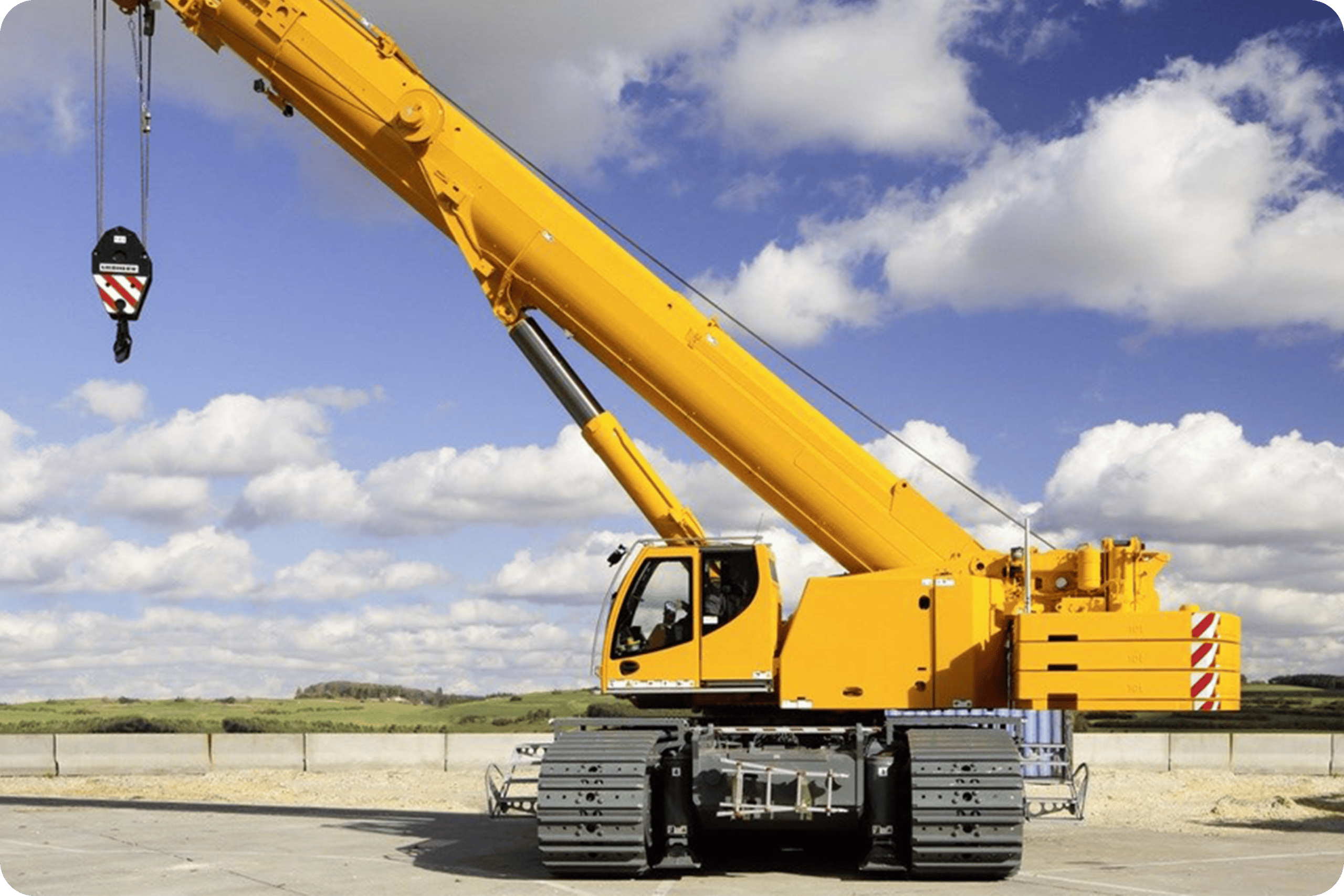
This Level 2 NVQ Diploma in Plant Operations (Cranes and Specialist Lifting) is for experienced crawler crane operators who already operate crawler cranes on active construction sites.
It is designed for operators who hold a Red CPCS A02 or NPORS N103 Trained Operator card and need to complete the work-based NVQ to upgrade to the Blue Competent Operator card.
The assessment is built around the lifting work you already do: pre-use checks, setting up the crane, checking ground conditions, following lift plans, lifting and transferring loads, travelling where applicable, communicating with the lifting team, completing records and shutting down safely.
No classrooms, no written exams and no theory test. You provide workplace evidence and complete a one-to-one assessment discussion with your assessor.
This qualification is suitable for experienced crawler crane operators who:
It is not a beginner course. The NVQ is for people who are already competent and need their workplace skills formally assessed and certificated.
Ready to upgrade your Crawler Crane card?
A clear, evidence-based assessment process built around your normal work as a crawler crane operator.
Complete the short online form. An assessor calls you free of charge to confirm your experience, card route, machine access and suitability.
Once approved and payment is made, we register you with NOCN and introduce you to your assessor so you can start submitting your evidence.
Submit site documents, photos and short videos directly to your assessor, showing your normal crawler crane work, including checks, set-up, lifting operations, communication, hazard awareness, travelling where applicable and shutdown.
Your assessor reviews your evidence and completes a one-to-one discussion with you about the way you operate safely and follow lifting procedures on site.
Once your NVQ is achieved, you can use the certificate to upgrade to the Blue CPCS or NPORS Competent Operator card.
The qualification confirms your competence in the core plant operations requirements and the crawler crane-specific cranes and specialist lifting unit.
You will complete three mandatory units, including the plant-specific unit for Preparing and Operating Crawler Cranes to Lift and Transfer Loads in the Workplace.
The plant-specific unit is referenced as D/506/4601 and confirms competence in preparing and operating crawler cranes for lifting and transferring loads.
Your evidence comes from your normal crawler crane work. Your assessor will guide you, but the evidence must show real workplace activity, not simulation.
Typical evidence includes site documents, a witness testimony, short videos of you operating, and an assessor observation report based on the videos or an on-site observation.
Key things operators ask before starting the Crawler Crane NVQ.
Yes. Once you achieve the Level 2 NVQ Diploma in Plant Operations for Crawler Crane, you can use the certificate to upgrade your Red CPCS A02 or NPORS N103 Trained Operator card to the Blue Competent Operator card, subject to the normal CPCS or NPORS application process.
The pace depends mainly on how quickly you submit your evidence and respond to assessor feedback. Some experienced crawler crane operators complete very quickly when their evidence is ready. Others take longer because of shifts, site access or waiting for the right lifting activity to film.
You will have up to 12 months of support from registration if needed.
No. This is a work-based NVQ assessment. There are no classrooms, written exams or college-style assignments. You send evidence from your normal work and complete a one-to-one assessment discussion.
You will normally need evidence such as a pre-use check video, set-up video, lifting task video, communication video, travel or positioning video where applicable, shutdown video, lift plan, RAMS, site induction record, inspection records, defect reports, witness testimony and an assessor observation report.
Your assessor will confirm exactly what is suitable for your own role and site.
No, not in most cases. If you can provide sufficient, verifiable video evidence and supporting workplace documents, we normally won’t need to attend site. If your assessor cannot fully verify competence from the evidence provided, they may request further evidence or arrange an on-site observation. Some candidates also prefer an on-site assessment, and we can arrange this where available. Additional travel or site visit charges may apply depending on location.
Yes, if the employer is CITB-registered. This NVQ is eligible for the £600 CITB short qualification grant, claimed by the employer after completion. Private individuals who are not CITB-registered cannot claim the grant themselves.
Yes. Each plant category requires a separate NVQ, but if you complete more than one category at the same time, we reduce the overall cost.
Click any Apply Now button on this page and complete the short online profiling form. We ask for your details and a photo of the front and back of your CPCS or NPORS card.
An assessor then calls you for a free, no-obligation suitability check. If approved, we send the invoice and register you once payment has been made.
Need more information before applying? Send us an enquiry and our office team will get back to you or send a Crawler Crane NVQ information pack.
Useful guides about plant NVQs, CPCS and NPORS card upgrades, evidence and CITB grants.
CPCS and NPORS cards explained for plant operators. Learn how Red and Blue cards work, how to upgrade
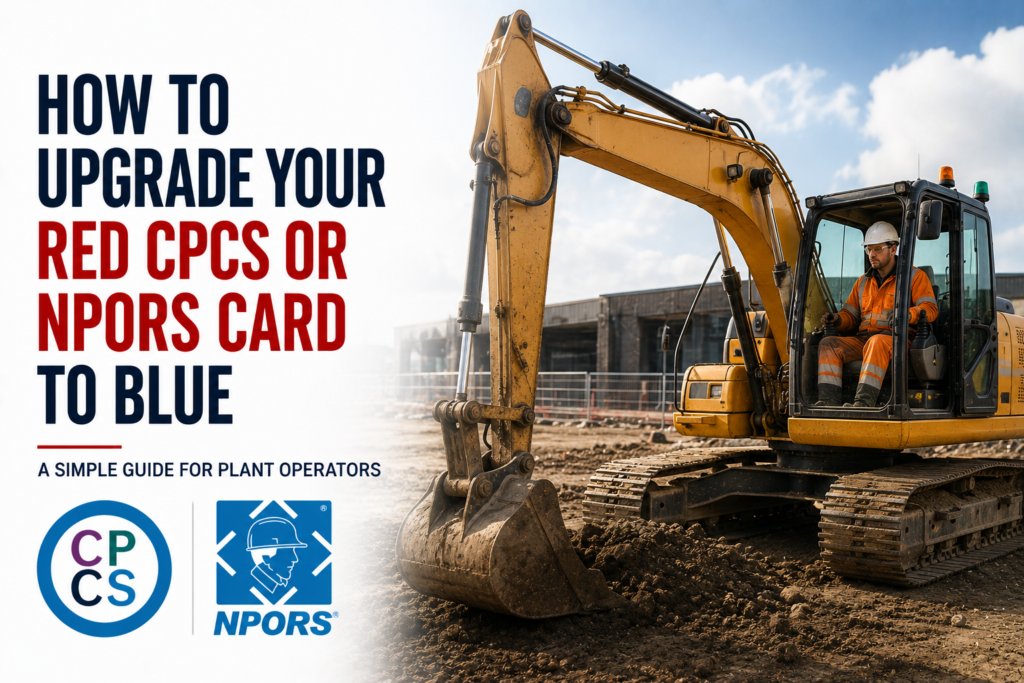
Upgrade your Red CPCS or NPORS Trained Operator Card to a Blue Competent Operator Card with a fast,
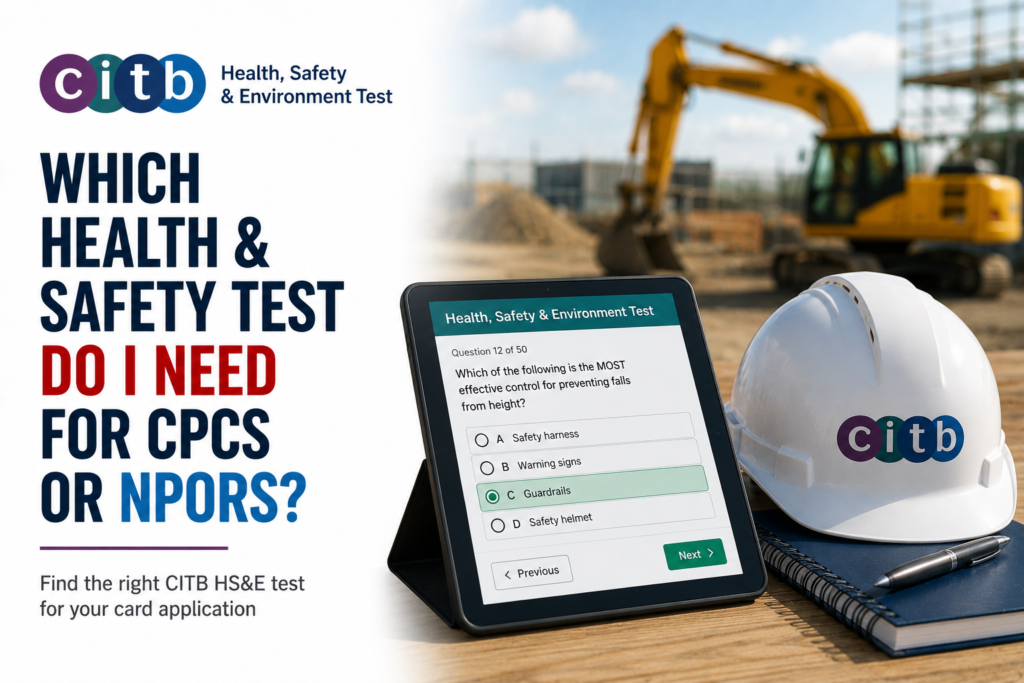
Find out which CITB Health, Safety & Environment test you need for your CPCS or NPORS card —
Category
Crawler Crane
CPCS/NPORS Code
CPCS A02 / NPORS N103
Qualification Level
Level 2 NVQ Diploma
Assessment Method
Remote or On-Site
Cost
£745 + VAT
CITB Grant Claimable
£600
This NVQ is for crawler-crane operators who already hold a Red CPCS A02 or NPORS N103 “Trained Operator” card and have at least six months’ experience operating crawler cranes on active construction sites.
You will be registered for the Level 2 NVQ Diploma in Plant Operations (Construction) (600/3638/2 ) – Cranes and Specialist Lifting, which contains three mandatory units:
Conforming to General Health, Safety and Welfare in the Workplace — Unit ref A/503/1170
Conforming to Productive Working Practices in the Workplace — Unit ref J/503/1169
Preparing and Operating Crawler Cranes to Lift and Transfer Loads in the Workplace — Unit ref D/506/4601
Successfully completing this NVQ lets you upgrade to the Blue “Competent Operator” card and demonstrate full occupational competence as a crawler-crane operator.
This Crawler Crane NVQ is entirely evidence-based and focuses on proving your real workplace competence. Instead of taking another test, you’ll demonstrate how you operate the crane day to day by submitting clear photos and short videos of your normal work — for example, pre-start checks, lift setup, load handling, travelling (if applicable) and shutdown procedures.
You’ll also include genuine site paperwork such as inspection sheets, lift plans, RAMS, maintenance logs or defect reports. Every NVQ also includes a short expert witness statement from a supervisor or manager who has observed you operating safely and competently on live jobs. All of this can be uploaded to our secure online ePortfolio whenever it suits you.
Your assessor reviews each upload carefully, providing feedback and confirming that the evidence is authentic and complete. If needed, they may ask for extra evidence or decide to carry out a short on-site observation to verify particular elements.
Once your evidence is ready, you’ll have a one-to-one discussion with your assessor — usually over a video call — where you’ll talk through your work, the safety measures you follow, and the decisions you make while operating. It’s not a test; it’s a structured, recorded conversation based on your real site experience.
After the discussion, your assessor completes a detailed Observation Report and verifies your evidence before signing off the NVQ for certification. Around a week later, you’ll receive your electronic certificate so you can upgrade your CPCS or NPORS card.
No classroom sessions, no written exams — just clear, verified proof of the work you already do.
Below are some examples of the kinds of questions an assessor may ask during the professional-discussion part of this Level 2 NVQ:
Assessor: How do you make sure the crawler crane is set up and stable before starting lifting operations?
Learner: I check the lift plan and make sure the crane is on firm, level ground with the track plates properly positioned. I check for any soft spots or hazards in the working area, inspect the crane for defects, and confirm the load chart matches what I’m lifting. I also verify all communication with the lifting team is clear before beginning.
Assessor: Which personal protective equipment do you wear on this site and why?
Learner: I wear a hard hat to protect from falling objects, a high-vis vest to stay visible to others on site, and safety boots for foot protection. Gloves are useful when handling rigging gear, and I wear ear defenders if I’m near noisy plant. If I’m entering or exiting the cab in poor conditions, I also make sure I have good grip and stable footing.
Assessor: How does following a method statement help ensure a safe and productive lift?
Learner: The method statement tells us exactly how the lift should be carried out—including the sequence of tasks, lifting team roles, communication signals, and any risks or limitations. Following it means the team works more efficiently, avoids delays or rework, and everyone stays safer because we’re all on the same page.
Think of evidence as anything that shows you operating the crawler crane safely and following normal site rules.
Visual proof:
Clear phone photos and short videos of your pre-use checks, setting up the crane on site, tracking to position (if applicable), lifting and placing loads, and carrying out end-of-shift shut-down. You could also include clips showing how you use communication methods like hand signals or radios during lifting operations.
Site paperwork:
Routine site documents that carry your name or signature and show you are following company procedures—pre-start or weekly inspection sheets for the dumper, relevant RAMS or method statements you have signed, daily activity briefings, maintenance or fuel logs, and even hazard reports or near-miss cards you have completed.
Witness statement:
A short note from a lift supervisor, site manager, or appointed person confirming they have observed you operating the crawler crane competently on a live site.
General safety and productivity:
Anything that shows you play an active role in keeping the site safe and well-organised. Examples include hazard or near-miss reports you’ve submitted, toolbox talk attendance sheets, briefings you’ve delivered to the lifting team, and communication logs—such as radio messages or emails—showing how you helped coordinate crane movements or respond to on-site changes.
The timing is largely up to you. Your assessor can only start reviewing your portfolio once you’ve uploaded your evidence, so the sooner everything is in the e-Portfolio, the sooner the process moves forward.
Some learners upload all their photos, videos and paperwork in a couple of days, schedule their discussion straight away and finish in less than one week. Others spread it out over several weeks because of shifts or site access.
In short, the pace is in your hands—submit your evidence promptly, respond to feedback quickly, and you can complete the NVQ just as fast.
Click the “Book your NVQ” button and you’ll be taken to our short online profiling form. The form collects the details we need to register you and asks you to attach a clear photo of the front and back of your CPCS or NPORS card.
When the form arrives, one of our assessors phones you for a brief chat. The call confirms that the NVQ is a good fit—that you have the right skills, site access, machine availability and can gather the required evidence.
If the assessor is happy, we email an invoice. The profiling call is free and there is no obligation: if you decide not to go ahead, simply ignore the invoice. If you do want to proceed, pay the invoice and we will enrol you and pass your details to the assessor the same day, so you can start collecting evidence straight away.
Yes, if you are a CITB-registered employer. This NVQ is eligible for the short-qualification grant of £600 (claimable on completion by the employer).
Only the company (not the individual learner) can make the claim, and the application must be submitted to CITB within 52 weeks of the achievement date.
If you are a sole trader or limited company already on the CITB register, you can still claim; private individuals who are not levy-registered cannot.
To confirm eligibility, call the CITB Levy & Grants team on 0344 994 4455 (Mon–Fri, 08:00–18:00) or email levy.grant@citb.co.uk to confirm your registration and grant status.
Yes. Each category (ticket) requires a separate NVQ, but if you complete more than one at the same time, we’ll reduce the overall cost:
1 category – £745 + VAT
2 categories – 25% off (£1,118 + VAT)
3 categories – 35% off (£1,451 + VAT)
4 categories – 40% off (£1,788 + VAT)
The more categories you complete together, the bigger the saving — and you’ll still have up to 12 months to finish them all. Book multiple categories and save up to 40%.
Category
Crawler Crane
CPCS/NPORS Code
CPCS A02 / NPORS N103
Qualification Level
Level 2 NVQ Diploma
Assessment Method
Remote or On-Site
Cost
£745 + VAT
CITB Grant Claimable
£600

Part of the CADUK group of companies – supporting construction workers with NVQs since 2011.
This site is protected by reCAPTCHA and the Privacy Policy and Terms of Service apply.